
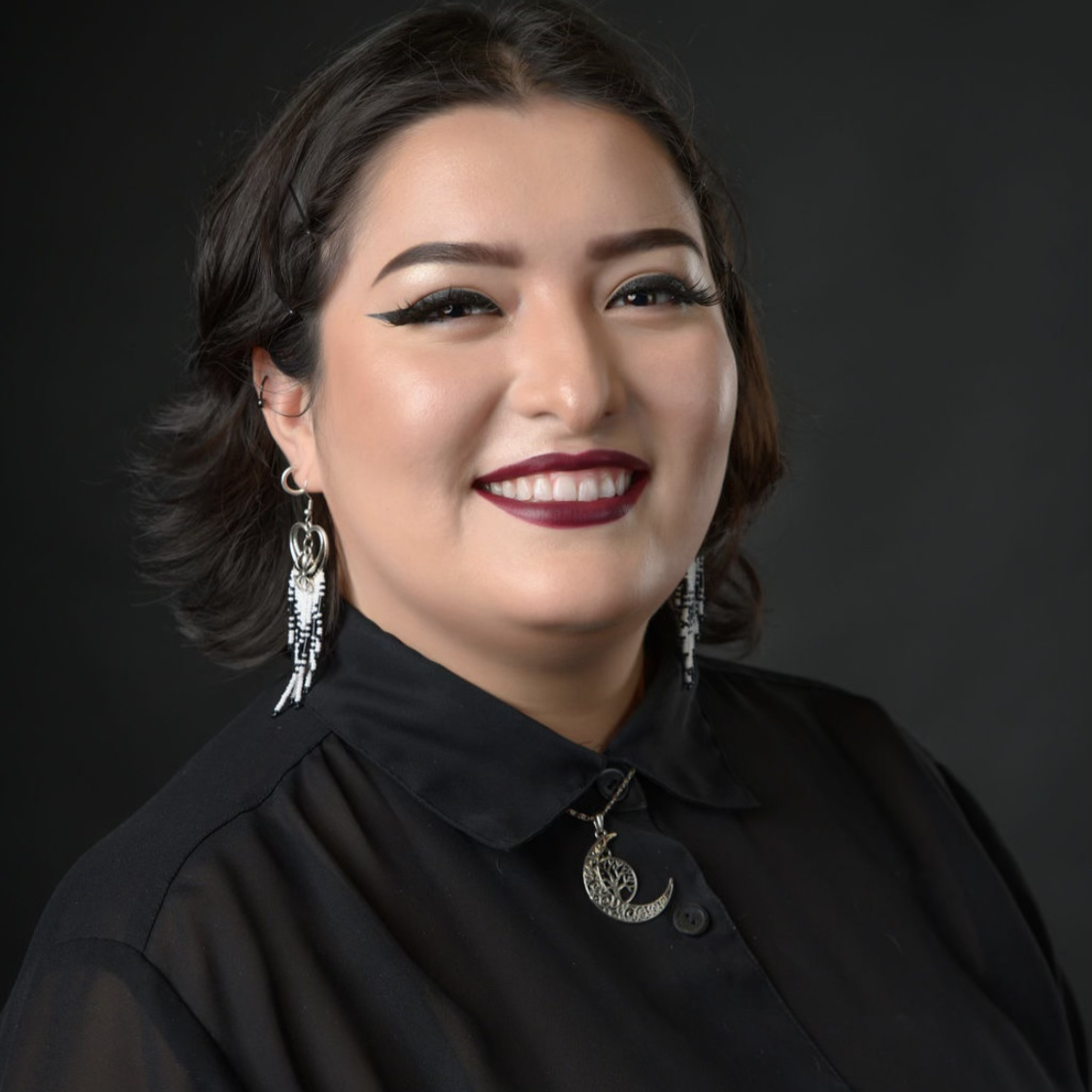
The following reflection, written by Cohort 1 Alum Salma Torres, VP of Training and Youth Initiatives at CalPride, is part of the REALize Power Reflection Series and explores the importance of centering the lived experiences of gender expansive people of color. Salma’s insights have key implications for how we think about evaluation and learning in efforts supporting gender expansive people of color, including:
- Recognize the historical context of the community: Understanding the legacy of advocacy and resilience within marginalized communities is essential for creating equitable solutions.
- Meet people where they are and set realistic standards for participation: Rigid requirements often alienate those most in need of support. A harm reduction model that celebrates small victories can foster inclusivity and progress.
- Value the voices of individuals in addition to collective community experiences: Lived experiences are a form of qualitative data that provide invaluable insights into the needs and challenges of marginalized communities.
- Listen to diverse perspectives that better reflect the communities being served: Amplifying grassroots voices ensures that solutions are informed by those who understand the realities of systemic inequities firsthand.
Salma’s piece is a powerful reminder that the most transformative change comes from within: within the voices of those who have lived through the challenges we seek to address.
To read Salma Torres’ full piece, “Centering the Margins: Using Narrative Evaluations to Include Gender Expansive People of Color,” please continue to read below.
Centering the Margins: Using Narrative Evaluations to Include Gender Expansive People of Color
Written by: Salma V. Torres, VP of Training and Youth Initiatives, CalPride.
Acknowledgments: This reflection was co-created with the Lift Every Voice Team and shaped through peer review by fellow Cohort 1 Alum, Jase Elam.
The Legacy of Gender Expansive Leaders in LGBTQ+ Movements
56 years ago, in the early morning hours of June 26th, 1969, tension was in the air in New York City’s Greenwich Village, the epicenter of the Big Apple’s counterculture movement and a neighborhood where queer and transgender individuals often gathered. On Christopher Street, in the now-iconic Stonewall Inn, an impromptu police raid had stirred agitation amongst the bar’s patrons– many of whom were queer, trans, low-income, disadvantaged, and spurned by society for daring to live their authentic selves; all of them were fed up with the police treatment of the queer community.
As the mythos goes, while the brutal police raid was being conducted, a brick was thrown from the crowd of patrons, and chaos erupted. Police clashed with clientele, kicklines pushed them back, and the street became flooded with queer and transgender people of color (QTPOC) who rose up and fought back against institutional mistreatment. No one for certain knows who exactly threw the first brick– if there even was a brick that was thrown. Some reports assert that it was the mistreatment of one Stormé DeLarverie, a biracial butch lesbian, and her calls to action that began the uprising. Others claim that Sylvia Rivera or Marsha P. Johnson, a Latin-American transgender woman and Black-American transgender woman, respectively, were the first to throw a brick.
Even if Stormé, Sylvia, and Marsha weren’t the ones who threw the first brick, their leadership and overall impact on the Gay Liberation movement are still too monumental to ignore. It was and always has been people of color who are unwavering in their resolve for the advancement of queer liberation and undaunted by consequences to themselves in advocating for their community’s rights.
The Erasure of Marginalized Voices in Modern Advocacy
With all of this put into perspective, it’s unfortunate that the people who gave the most for the advancement of the modern-day LGBTQ+ rights movements are often those who are left out of the conversation when it comes to creating systemic change to better their communities and the queer community at large. People who once were the leading voices of change are nowhere to be found in modern-day conversations about what change should look like. Their perspectives go unheeded even though they worked tirelessly for the advancement of LGBTQ+ rights, due to the fact that white, patriarchal systems co-opted their language and hijacked their struggles for the advancement of some, primarily the advancement of predominantly white, cisgender, male-loving-male abled bodies of a higher socioeconomic class. These are the bodies that are most palatable to the systems in our country that are currently in place.
The Value of Lived Experiences in Evaluation and Policy
Honoring this history, it reminds us of a fundamental concept we should not forget when seeking to make evaluative work more equitable and culturally responsive: we should seek to uplift and value the voices of grassroots activists in the same way we do those who we consider “experts” in fields, for there is no greater teacher than experience.
Even if the true details of that fateful night in New York City are unclear, one thing is: gender expansive people of color were at the frontlines of the event that kick-started the Gay Liberation movement, as they were with many other prominent movements for social change. Not professionals with credentials, licenses, or PhDs, but people with lived experience who refused to stay silent in spite of their circumstances and demonstrated that they too could create meaningful change. Honoring this history, it reminds us of a fundamental concept we should not forget when seeking to make evaluative work more equitable and culturally responsive: we should seek to uplift and value the voices of grassroots activists in the same way we do those who we consider “experts” in fields, for there is no greater teacher than experience. Especially when it comes to BIPOC grassroots activists who lead vastly different lives than people crafting policies and conducting evaluations, it’s pertinent to make sure we’re centering their voices to utilize the full strength of their unique perspectives and understandings. It is important that we reach out to the trusted messengers in communities and its vocal members to include voices that may often be overlooked and go unheard.
Oftentimes, our gender expansive siblings of color don’t have the “right” credentials, don’t look or speak the “right” way, and don’t come from the “right” backgrounds. More often than not, funders, evaluation firms, and organizations alike seek people who are college-educated and proficient in the art of oration. Someone from a “good” background who has never been systems-involved or has “made it out” of systems without many interactions with law enforcement. Generally, they are looking for white-individuals who come from two-parent homes with a white picket fence and a golden retriever playing in the yard. But lived experiences, like those of Marsha, Sylvia, and Stormé, are a form of qualitative data that can provide invaluable insights into the needs and challenges of marginalized communities. By integrating these narratives into programmatic and evaluation frameworks, we can create a more holistic understanding of the impact of our programs.
I myself was born into a low-income family of blue-collar workers from Mexico. My siblings and my first language was Spanish, not English, and oftentimes I mispronounce words that I’ve read, but never actually heard spoken out loud before. Higher-level vocabulary was not naturally heard in the environment I was raised in, but earned me mockery in spaces where I was often the only voice like mine. Additionally, I was only the second in my family to go to college, a stark juxtaposition with my white middle-class peers in college who often had one or more parents attend college, some with a master’s level education or higher. Sometimes, my ACE score was higher than the total amount of debt my fellow students and colleagues went into to pay for school, as they had the privilege of having parents who could and would support their education.
The Power of Resilience and Perspective
Despite all of the academic and monetary privileges that they had over me, oftentimes I had my lived experiences as advantages over individuals who never knew what it was like to go without, to suffer bullying for their ethnic background, sexual orientation, and gender minority, and high levels of toxic stress at home. I used these lived experiences to inform projects, papers, and volunteer work that gave me a competitive edge that could hold its own against better education that many of my peers received, and brought new perspectives and viewpoints into spaces where they may not have been commonplace or held much water had it not been for me advocating for them to be held to the same standard and level as academic theories.
The reality of the situation is that many of the individuals who are typically in positions of power, like funders, policy-makers, and evaluators, do not have the lived experiences necessary to truly understand what it is our community needs. Immanuel Kant said it best when he stated that “experience without theory is blind, but theory without experience is mere intellectual play.” Someone who has not lived through the grueling hardships of being unhoused, on substances, working the streets, incarcerated, or otherwise in situations that people look down on from their privileged pedestals cannot and do not value the voices of modern-day Marshas and Sylvias.
Immanuel Kant said it best when he stated that “experience without theory is blind, but theory without experience is mere intellectual play.
While not every gender expansive sibling has struggled through these harrowing experiences, the truth is that many of us have and may because of the sociopolitical and legal systems that our siblings move through. If there is anything Sylvia, Marsha, and Storme have taught us, it is that we as evaluators and funders cannot and should not dismiss these voices and perspectives as easily. For example, evaluators can use qualitative data to highlight the systemic barriers faced by gender expansive BIPOC individuals. By collecting and analyzing data that centers their lived experiences, we can ensure that their voices are not only heard but also drive actionable change.
Individuals may use substances to cope with a world not built for them and resort to “less favorable” methods to earn a dollar for the day. Because of this, they’re excluded from programming, or programming for them does not exist all together. In my experience in working with gender expansive people of color at CalPride, many of them feel as though most funded spaces are too “white” and not made for them. Participants are denied access to services because of program rules and funding requirements that demand sobriety, when these very services could improve their material conditions enough for sobriety to be attainable. Even if we operate as a sex positive harm-reduction facility and operate a syringe service program, there are still questions and requirements demanded of us by our funders that alienate clientele who do not fit the rigid standard the funders seek. This pushes our gender-expansive siblings to the outskirts of our programming, driving them away from our services because it does not feel welcoming to them.
Shifting Toward Harm Reduction and Small Victories
Instead of focusing solely on abstinence, we should celebrate successes like “I haven’t smoked meth in a month” as meaningful progress. While none of us want our peers to struggle with substances, the hard truth is that due to systemic oppression and minority stress that many gender expansive people of color face, some may turn to substances as a coping mechanism. By shifting our approach to embrace and honor small victories, we can create funder-backed programming that allows us to meet people where they are. Let’s celebrate the small victories as opposed to demanding complete compliance to unrealistic expectations. This approach aligns with the REALize Power curriculum’s emphasis on culturally responsive evaluation that values progress and lived experience over rigid compliance.
So I challenge all funders, evaluators, and organizations alike, reading this– go the unconventional route. Listen to and uplift the voices of Marsha, Sylvia, and Stormé, who may not be the voices that you are used to hearing, but the voices that we need to be listening to, should we want to bring sustainable solutions to our communities. When you implement a harm reduction model and provide a seat at the table for people whose voices often go ignored, you’ll be surprised when you hear what you’ve been missing out on.